The Collège des Bons Enfants in Paris was the home of Vincent de Paul and the confreres of the Congregation of the Mission from 1625 to 1632.



The Collège des Bons Enfants in Paris was the home of Vincent de Paul and the confreres of the Congregation of the Mission from 1625 to 1632.
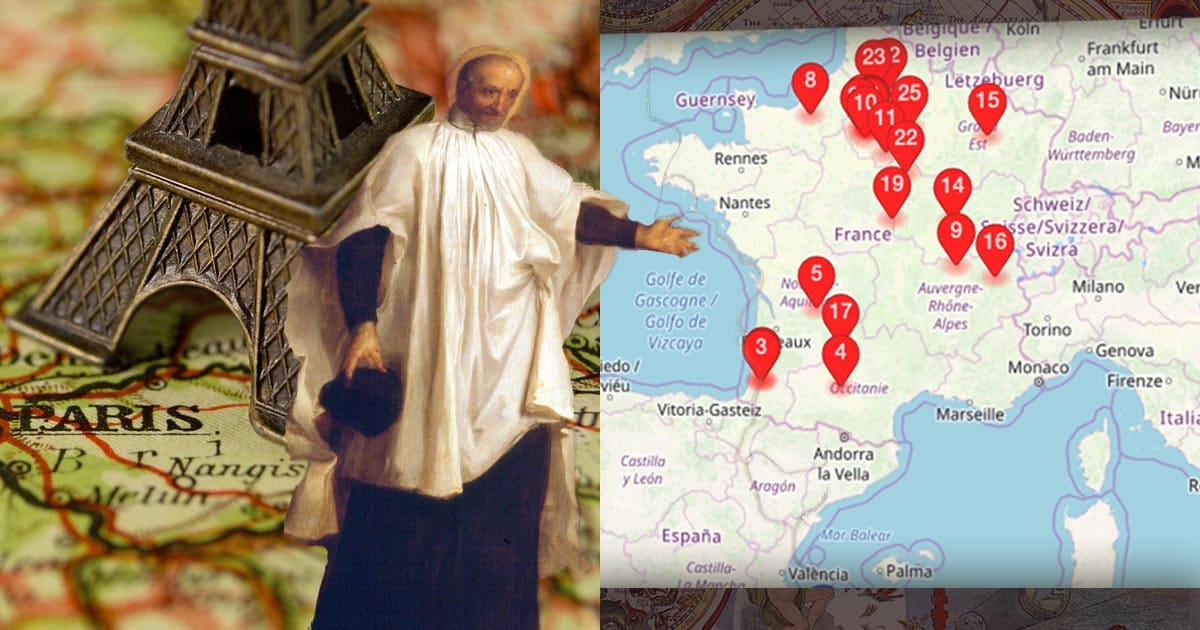
Beginning in 1641, Vincent worked on the major seminaries of Annecy, Cahors, etc. The houses for rural missions became numerous, as did the houses of the Sisters.
Beginning in 1641, Vincent worked on the major seminaries of Annecy, Cahors, etc. The houses for rural missions became numerous, as did the houses of the Sisters.
In 1635 St. Vincent de Paul sent Vincentians to Toul to take charge of the Hospital of the Holy Spirit, more of a refuge than a medical facility, in his efforts to bring relief to Lorraine which was ravaged by war during his lifetime.
The Hotel-Dieu was built in the 15th century as a hospital. This is typical of the hospitals that the church operated in the time of St. Vincent de Paul.
The Priory of St Lazare was the home of Vincent de Paul for the latter part of his life, after the Congregation of the Mission moved there from the College des Bons Enfants in 1632.
With other volunteer priests, Vincent gave missions in the villages belonging to the De Gondi family, in the Île-de-France, Champagne, and Picardy regions of France.
In August 1617 Vincent was a parish priest at Châtillon-les-Dombes where he founded the first Confraternity of Charity (precursor to the Ladies of Charity), a group of lay people to help those in need.
The Congregation of the Mission had its origins in a sermon given by St. Vincent in the parish church at Folleville.
In May 1612, Vincent de Paul took up the position of Parish Priest of Clichy, a small town of some 600 people, just to the northwest of Paris.
In 1610, Vincent lived in the Rue de Seine in Paris, and was one of several Chaplain-Almoners to Queen Marguérite de Valois, the first wife of Henry of Navarre (Henry IV of France).
Vincent was ordained at Château-l’Évêque in September 1600.