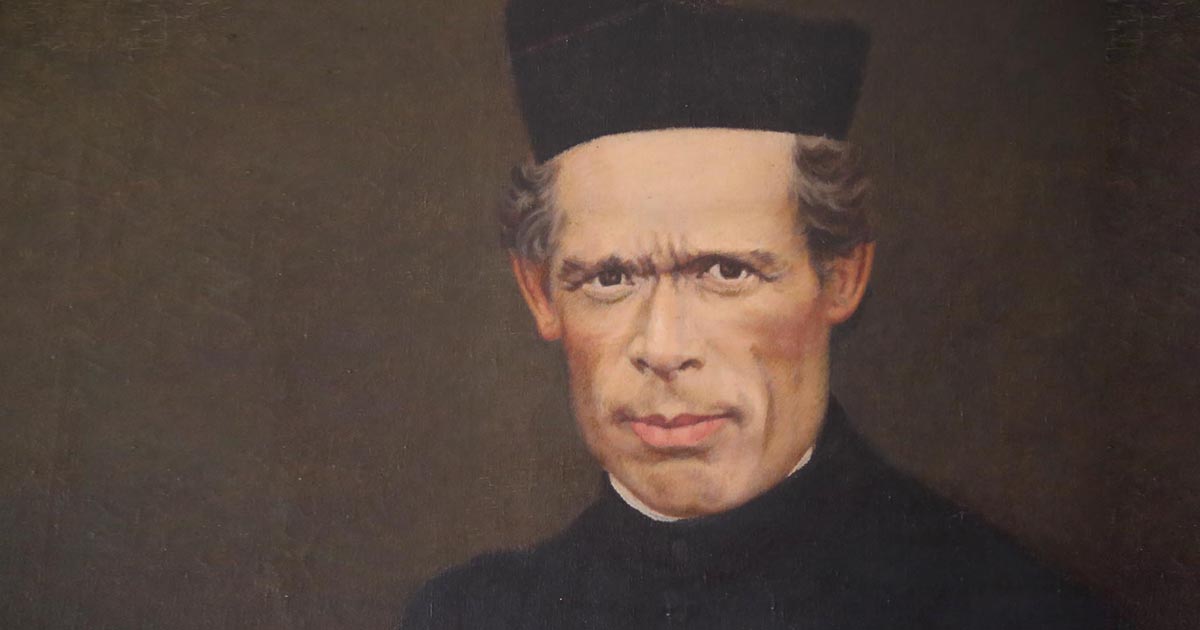
Blessed Federico Albert, a 19th-century Italian priest, devoted his life to serving the poor with humility, founding the Albertine Sisters and choosing faithful presence over prestige. His legacy shines as a quiet yet powerful witness to everyday holiness rooted in love, service, and deep trust in God.
Formation
Vincentian Churches Around the World 9 – Saint Louise de Marillac Catholic Church in Covina, USA
Founded in 1963 to serve a rapidly growing Catholic population, Saint Louise de Marillac Parish moved from improvised worship spaces to a nationally recognized church consecrated in 1973. Its modern architecture and active community life give visible form to the Vincentian values associated with its patroness: faith, practical charity, formation, and service.
Contemplation: Good That Remains Unrecognized
When the neighbor calls, we hear the voice of Christ. When go to visit him, we see the face of Christ. When we pray with the neighbor, together in His name, we feel the presence of Christ. When we feed Him, we are grateful. When we help Him, we feel God’s joyful grace. But when the neighbor calls a second time, a third time, a fourth or fifth time, do we always respond with the same love and gratitude?
A Vincentian Minute: Frederic Ozanam and Our Sunday Gospel 04
In this series, Fr. Rooney extends the Sunday experience by looking at how we practically live a liturgically informed life. This week: Ozanam’s concept of the “natural wage” was central to his vision of social justice.
The Christian Task: To Remain Profoundly Human
After presenting the challenges of technological power, the contrast between Babel and Jerusalem, and the need to build for the common good, the Pope gathers his vision into one essential appeal: in the era of artificial intelligence, we must remain profoundly human.
Addiction and Homelessness: What the Evidence Actually Says
Seven out of ten Ukrainians surveyed associate homelessness with addiction. Yet most people experiencing homelessness in the study reported never having had an alcohol or drug dependency. The evidence reveals a more complex relationship in which addiction may precede housing loss, develop after it, or become intertwined with trauma, isolation, and prolonged life without a home.
St. Vincent de Paul: A Life Given to the Poor (Part 9 and Last)
St. Vincent de Paul was named Patron Saint of Charitable Associations by Pope Leo XIII in 1885, recognizing his profound impact on Catholic charity and his enduring example of organized, compassionate service to the poor. His legacy continues to inspire countless charitable works worldwide, embodying a model of Christian love in action that unites prayer, humility, and practical aid to those in need.
Vincent de Paul: Father of the Poor
Saint Vincent de Paul is called the “Father of the Poor” because he devoted his entire life to helping the poorest, the sick, and the abandoned. Thanks to his compassion and organizational skills, Vincent transformed the face of 17th-century charitable work. He reminded people that Jesus Christ is present in every suffering person. To this day, he serves as a model of unconditional love for others around the world.
Serving the Poor in the Spirit of St. Vincent: A Spirituality That Comes To Life
For St. Vincent de Paul, serving the poor is not simply about doing something for them. It begins with an encounter with Christ, requires us to look at reality through God’s merciful eyes, and is lived in community. Recognizing Christ in the poor transforms both those who receive service and those who offer it.